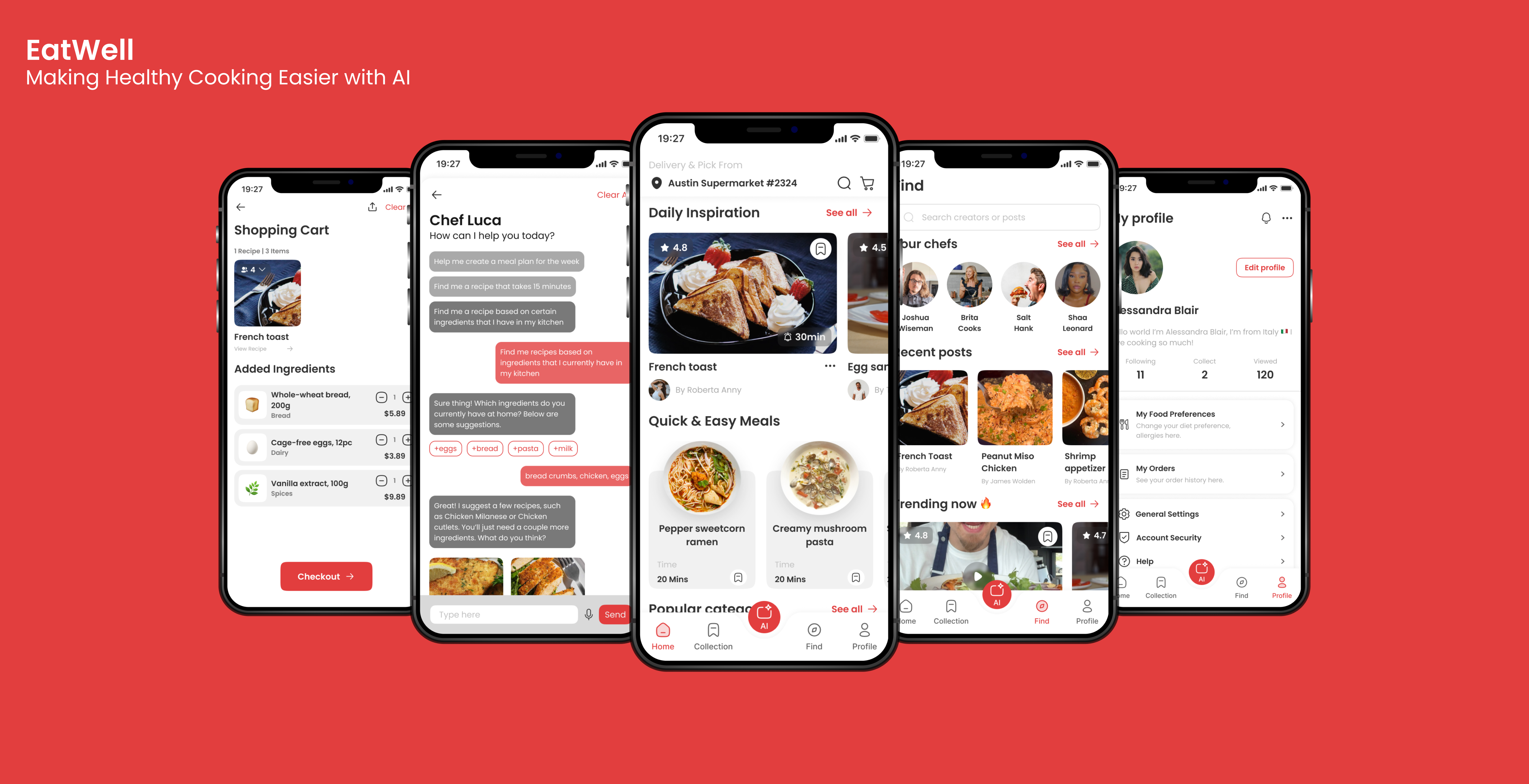
EatWell is a mobile app designed to help busy students and professionals save time and eat better by integrating AI-powered meal planning, ingredient delivery, and a social recipe community.
EatWell was developed as a team-based UX project that explores how AI can make healthy eating more accessible and enjoyable. Starting from zero, our team conducted user interviews, defined key pain points in daily meal planning, and iteratively designed and tested digital solutions using Figma.
EatWell integrates three main features: an AI Meal Planner, a Smart Grocery Assistant, and a Social Recipe Feed, creating a seamless experience that connects personalized nutrition, smart shopping, and community engagement. The app aims to help users plan, shop, and cook effortlessly, turning everyday routines into data-driven, health-conscious decisions.
As a UX Designer, I was primarily responsible for designing the main user flow and its interaction prototypes in Figma, focusing on the end-to-end experience from recipe exploration to grocery list generation. I also led user testing sessions, synthesizing feedback to identify usability issues and iterating on the interface to enhance clarity, navigation, and engagement. Through continuous refinement, I improved interaction efficiency and overall user satisfaction across core task flows.
“What can I cook with what I have?”
Instantly generate personalized weekly meal plans using your available ingredients, preferences, and time constraints.
- Weekly meal plan
- 15-minute meals
- Ingredient-based recipe suggestions
“No time to shop? Let EatWell handle it."
Create and customize a grocery list in two steps. Get delivery or pick-up through your favorite store.
- Auto-generated list from recipe selection
- Shop your way — choose your store on your terms
- Delivery/pick-up flexibility
“Follow, save, and cook what you love.”
See recipe posts from influencers or friends. Save ideas, leave feedback, and stay inspired.
- Integrated with social media recipe trends
- Bookmark favorites to personal collections
- Comment & share to the EatWell community
Before this project, I didn’t realize how common it is for people to struggle with cooking consistently—especially when you’re trying to eat with intention.
One of our teammates was following a dietitian’s plan, but quickly ran into a challenge: the advice was helpful, but turning it into daily meals was frustrating. Recipes had to be searched manually, ingredients didn’t always match, and nothing felt personalized.
That experience showed us something bigger: People who want to eat better don’t lack motivation—they lack the right support.
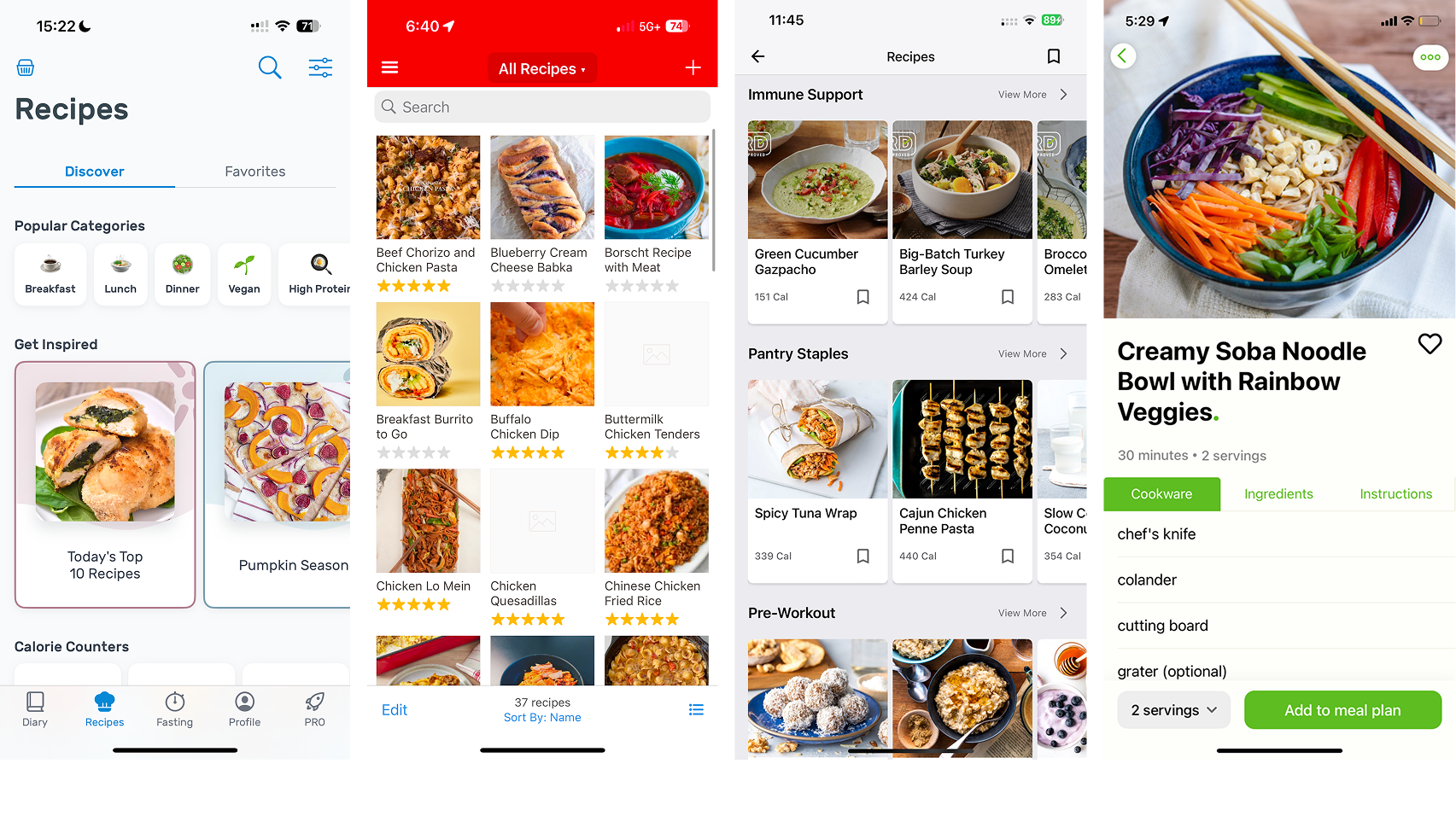
We reviewed popular apps like Whisk, Yummly, and Mealime to understand how others are tackling meal planning. We noticed consistent limitations:
- Lack personalized recipe recommendations
- Shopping and Cooking feel disconnected
- Complex UI/UX design
This gap reaffirmed our belief that what’s missing isn’t just another recipe app, but a smarter, more personalized way to turn health goals into real meals.
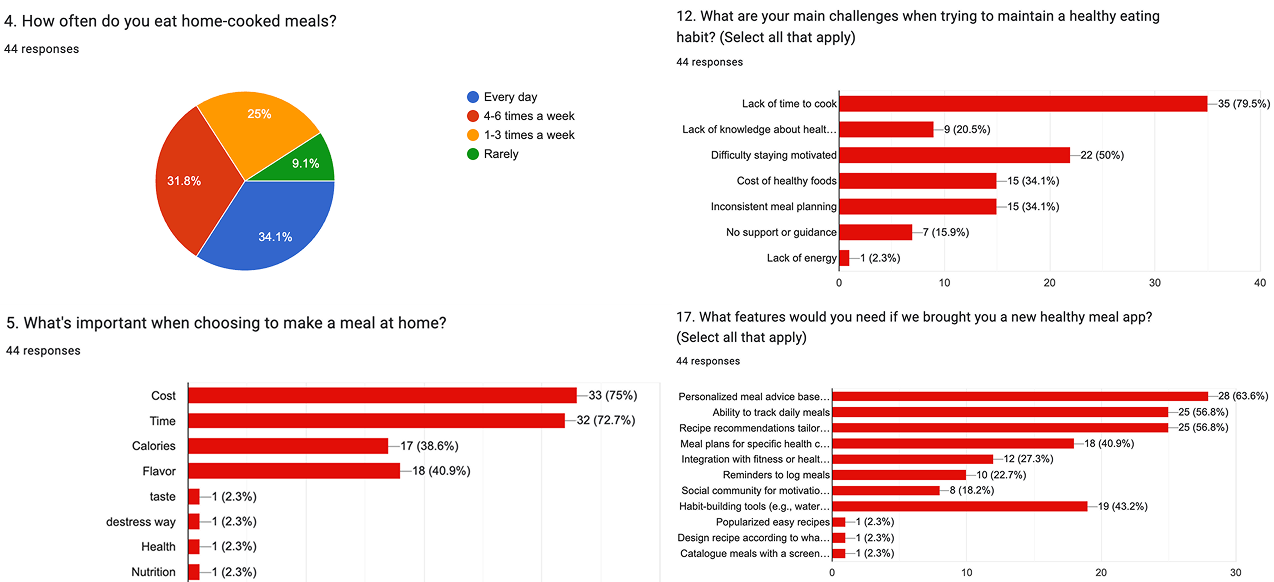
The majority of respondents were young adults aged 18–29, with over two-thirds identifying as students. Most reported eating home-cooked meals at least a few times per week.
84% search recipes from social media
80% don’t have time to cook
57% want tailored recipe recommendations
To explore how daily routines affect cooking behavior, we conducted in-depth interviews with five participants, two students and three full-time professionals, who cook at least occasionally.
Searching for quality recipes takes too long
Participants often jump between apps to find clear, relevant recipes
Food prep feels overwhelming
The full cooking routine, from shopping to cleanup, felt too time-consuming for busy lives.
Inflexible to What’s On Hand
Cooking is often limited by what’s already in the kitchen, making it hard to follow recipes.
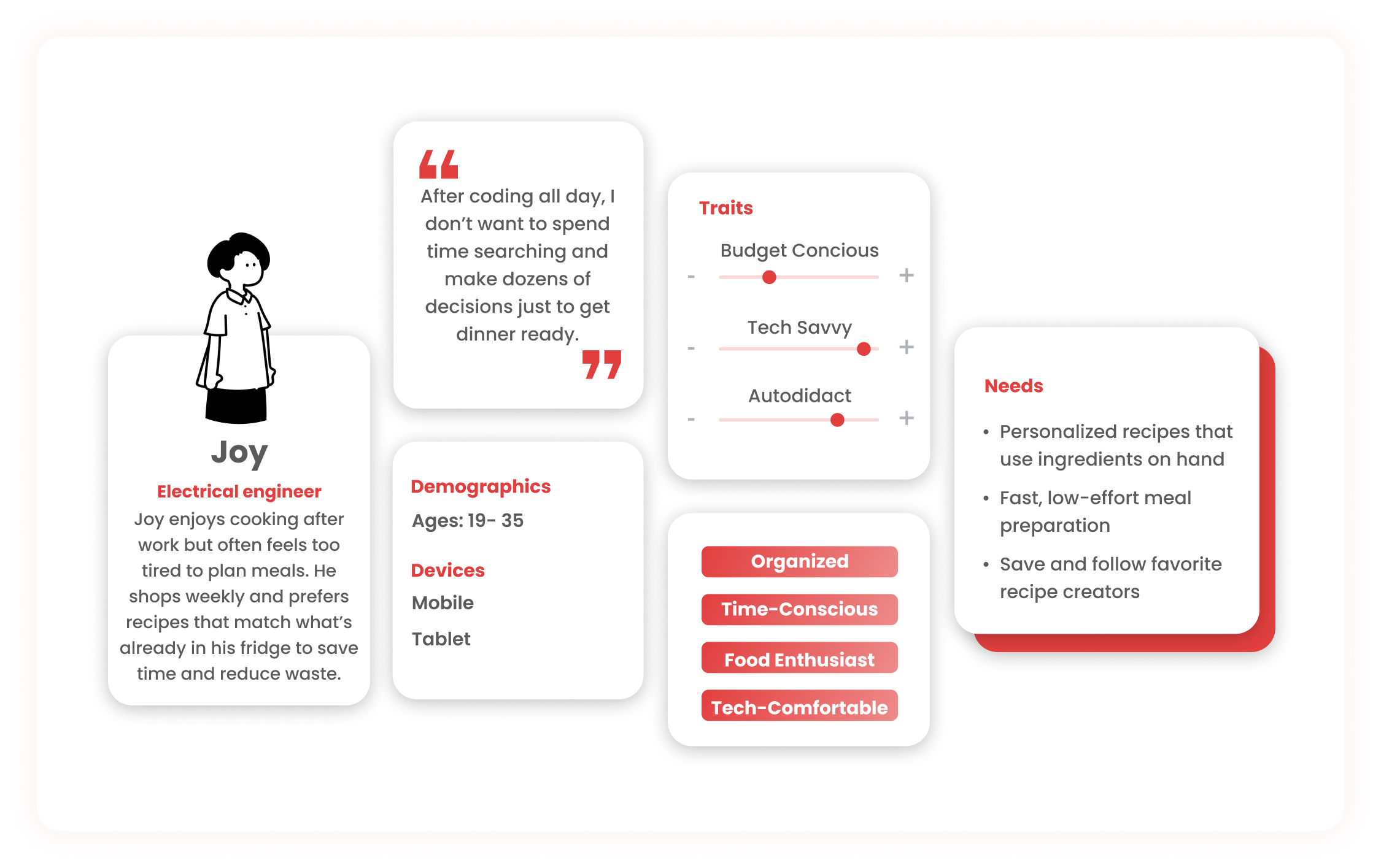
Our target users are busy young adults who value simplicity, flexibility, and smart recipe support.
Young adults who want to cook more at home often struggle to turn their good intentions into action due to time constraints, scattered recipe sources, and lack of tools that match their schedules and available ingredients.
- How might we leverage AI to recommend recipes that align with users’ preferences and what they already have at home?
- How might we simplify the process of planning, prepping, and cooking meals to save time and energy
- How might we make it easier for users to save, organize, and revisit recipes they find online?
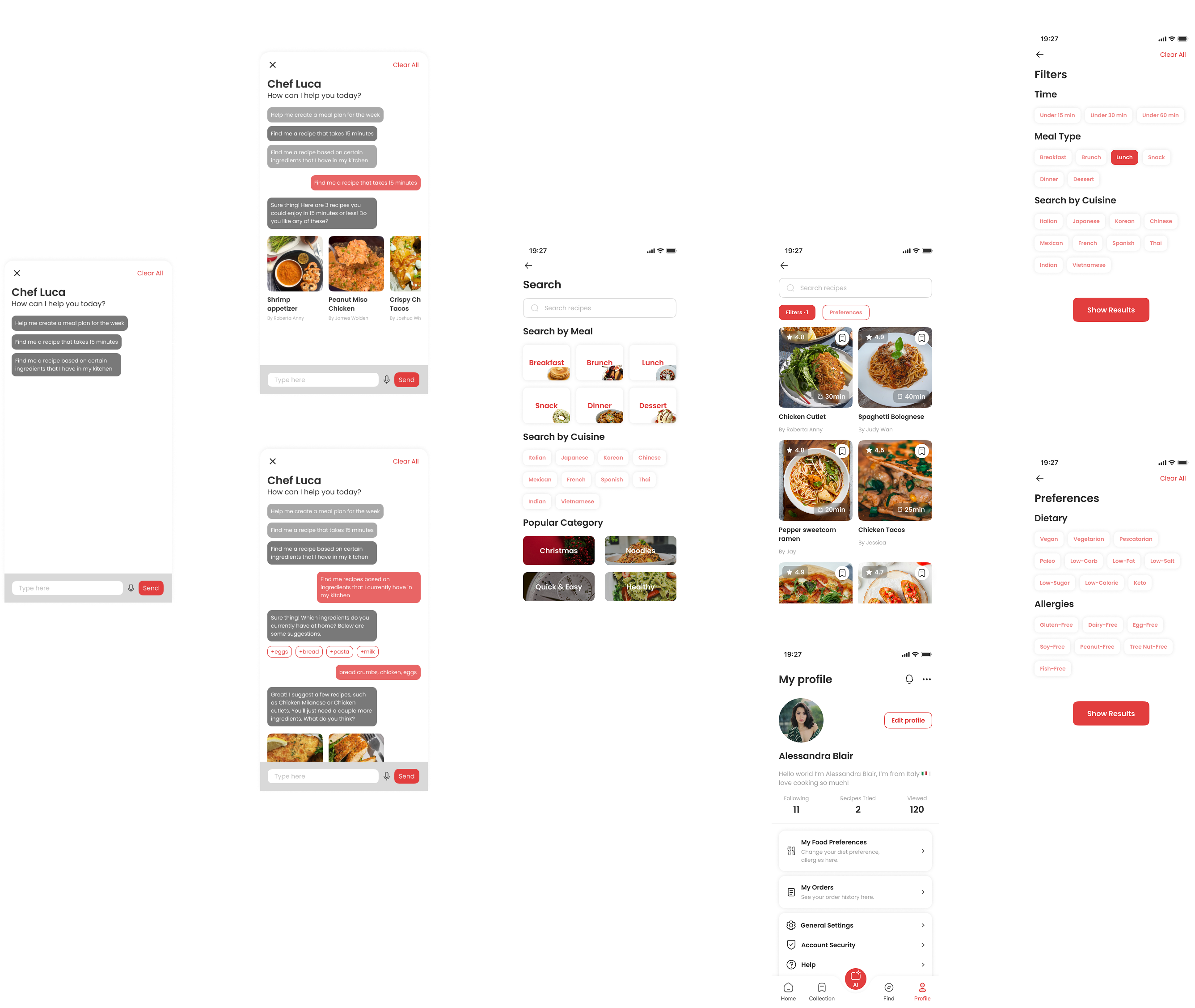
Users struggle to find recipes that fit their dietary preferences and what’s already in their kitchen, leading to wasted time and food.
The AI-powered assistant helps users get customized meal suggestions in seconds. Whether they need a quick 15-minute recipe, want to plan for the week, or generate tailored results based on ingredients they already have at home.
Key functions include:
- Smart recipe suggestions by time and pantry items
- Weekly meal planning with minimal input
- Conversational flow that feels like chatting with a real cooking assistant
For users who prefer to browse manually, the Search page offers detailed filters by meal type, cuisine, dietary needs, allergies, and available prep time, giving users precise control over what shows up.
Key functions include:
- Search by meal (e.g., lunch, snack), cuisine, or cooking time
- Personalized preference setup (e.g., vegan, gluten-free)
- “Show Results” generates a feed fully aligned with the user’s input
- Quick access to Food Preference setting on Profile dashboard
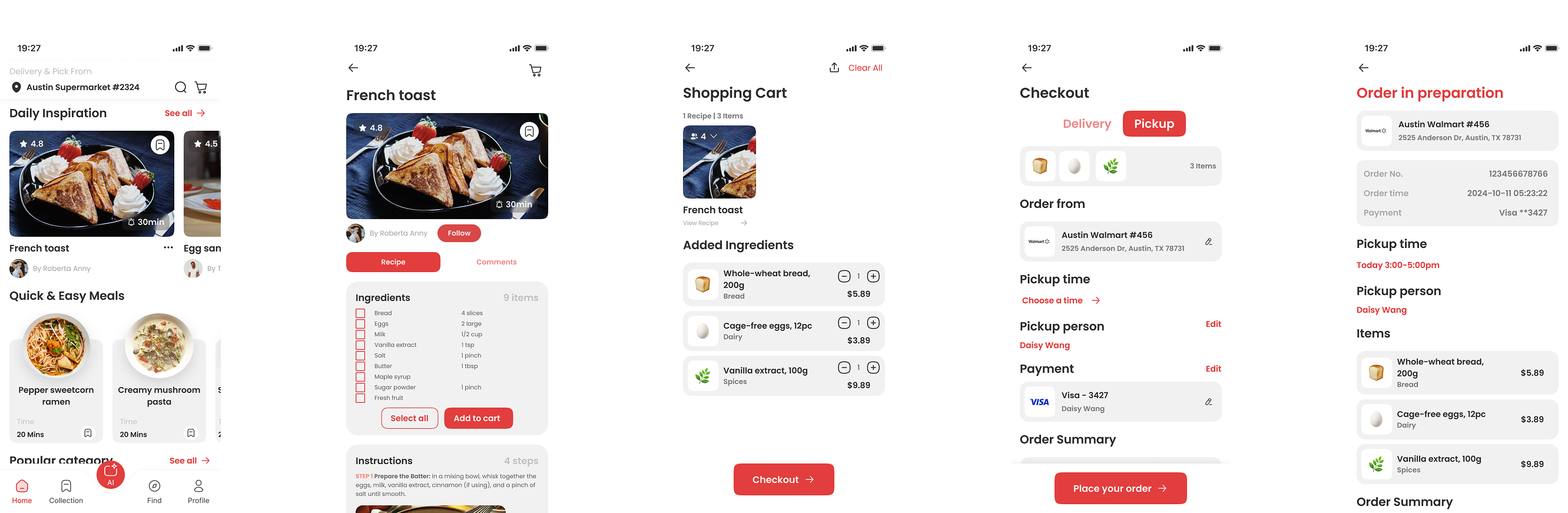
Planning and prepping meals takes too much time and effort, especially for users with busy schedules.
To reduce prep and planning fatigue, our app allows users to instantly add ingredients from any recipe to a shopping cart, customize quantities, and check out for delivery or pickup directly within the app.
Key functions include:
- Quick shopping list generation based on selected ingredients
- Seamless integration with local stores for delivery or pickup
- Real-time order summary and status tracking
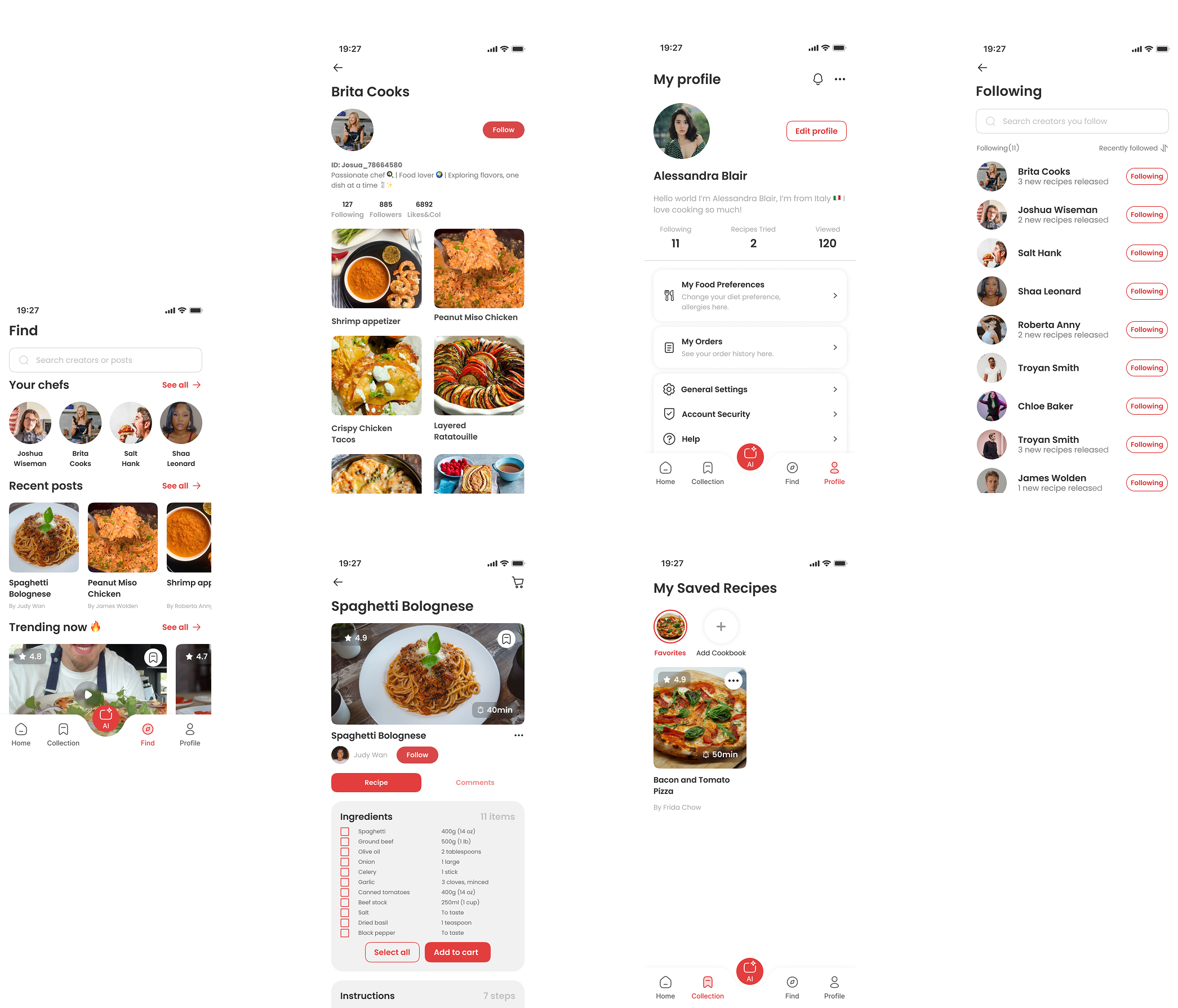
Social media recipes are hard to save, organize, and revisit—users can’t easily follow creators they like or track content they care about.
To help users stay inspired and connected, our app allows them to follow favorite recipe creators, get notified when new recipes are posted, and build a personalized collection by saving or categorizing recipes they love.
Key functions include:
- “Find” page lets users discover trending content and explore new chefs
- Follow creators and see their latest uploads in your feed - Save and organize recipes into favorites or custom cookbooks
- Quick access to followed creators and recipe history on Profile dashboard
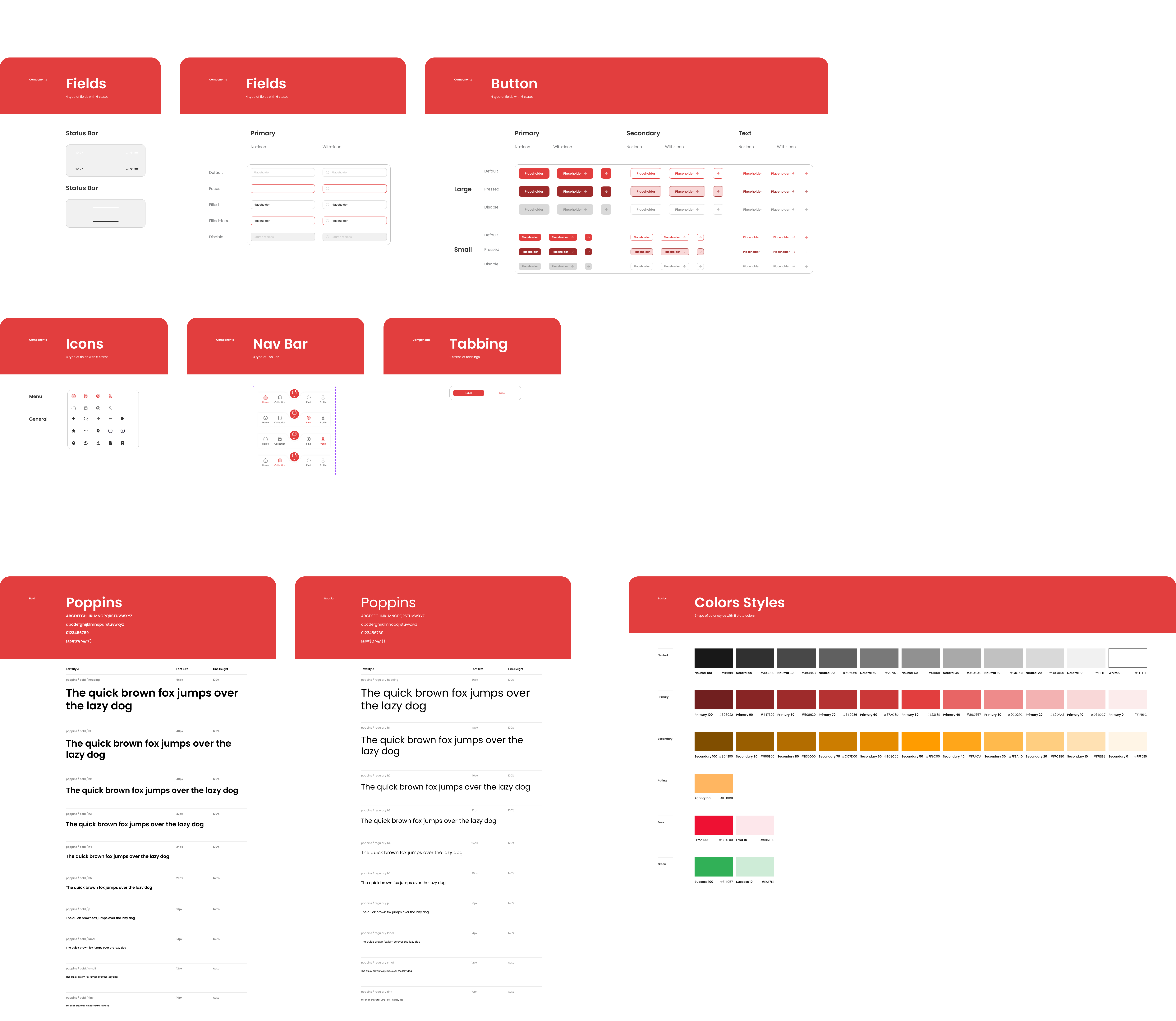
Our design system strengthens brand identity and ensures that every screen of the product feels cohesive, intuitive, and user-centered for the EatWell app.
Color Styles: A warm palette led by vibrant red to evoke appetite, passion, and energy, balanced with neutrals and supportive accents.
Typography: Poppins typeface ensures readability and a modern, approachable feel across devices.
Components: A library of reusable elements—buttons, fields, navigation bars, icons, and tabbing—designed with a component-based approach for efficiency and consistency.
Scalability: By standardizing styles and components, the system enables rapid iteration, coherent user experiences, and easier collaboration between design and development teams.
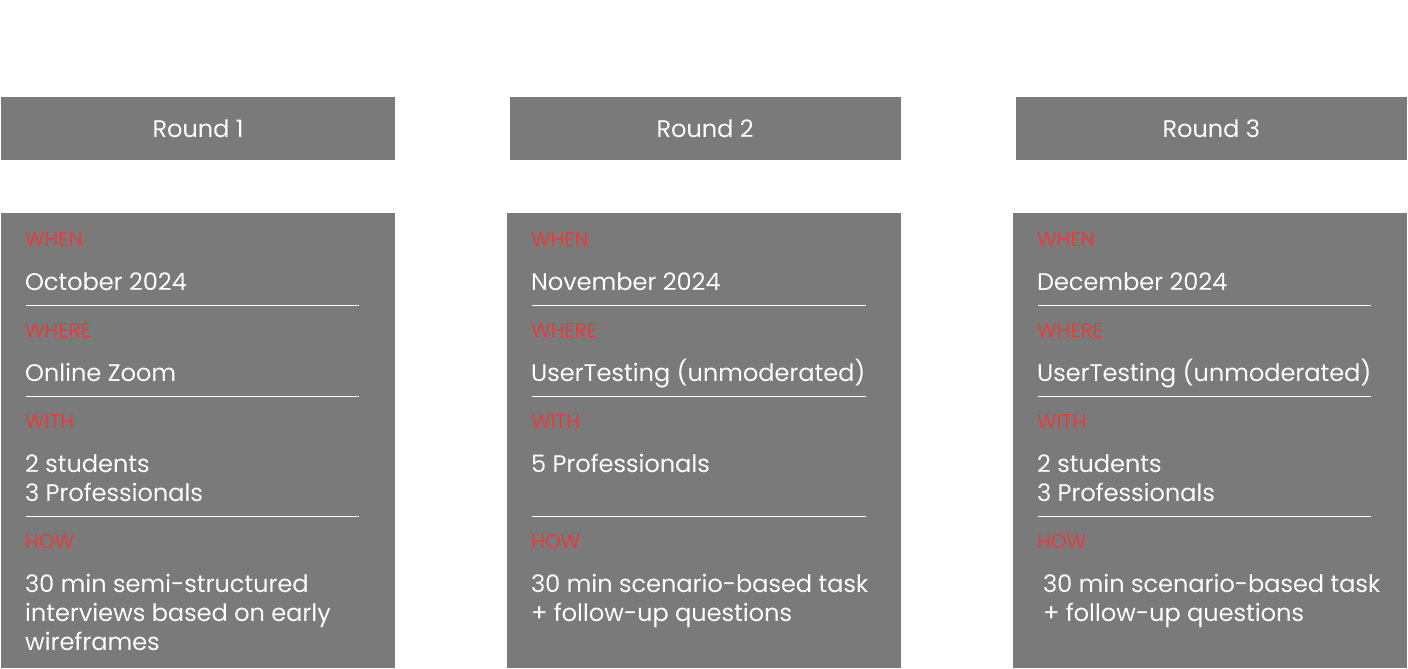
We conducted three rounds of user testing from October to December 2024. Our first round focused on moderated interviews over Zoom, using our initial wireframes to explore user expectations. In later rounds, we shifted to unmoderated testing via the UserTesting platform, where participants completed scenario-based tasks and follow-up questions. These sessions included both students and professionals, allowing us to gather diverse perspectives and iterate on key features grounded in real cooking routines.
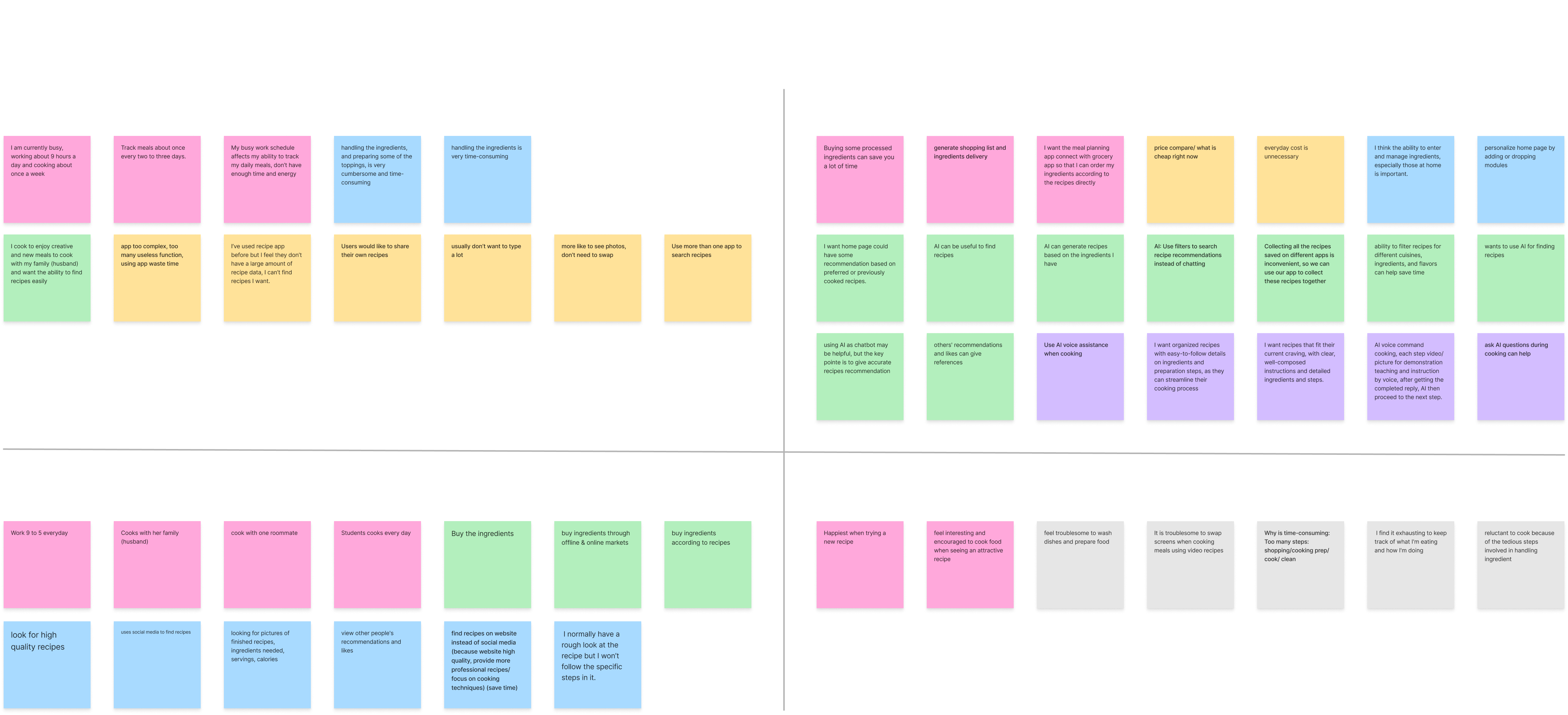
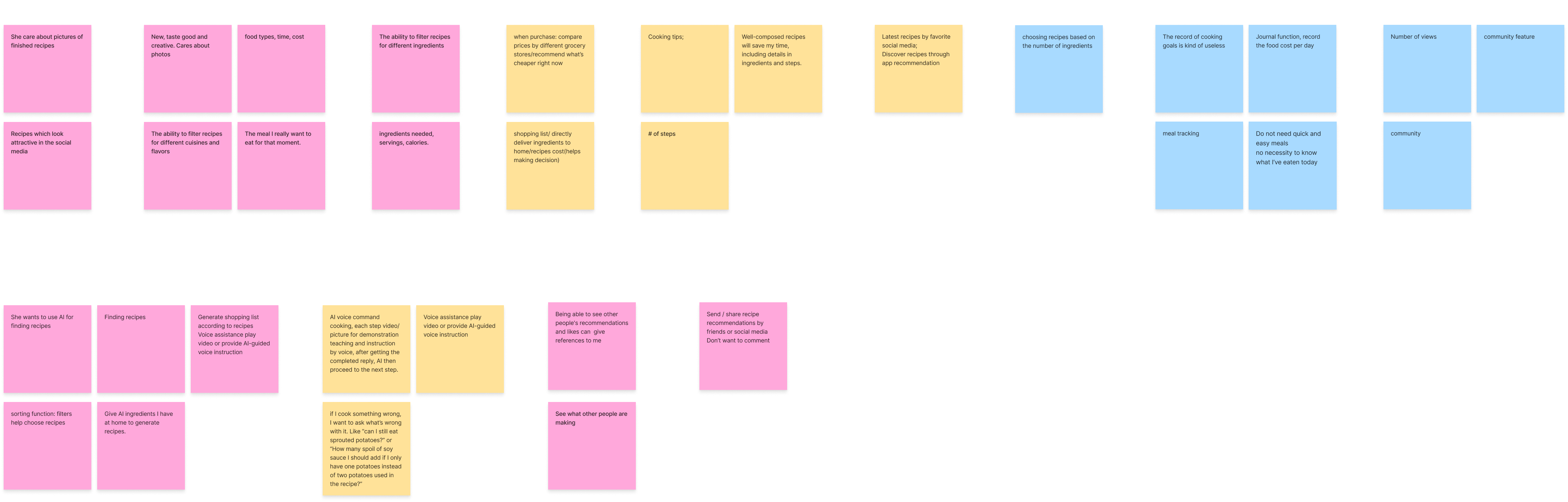
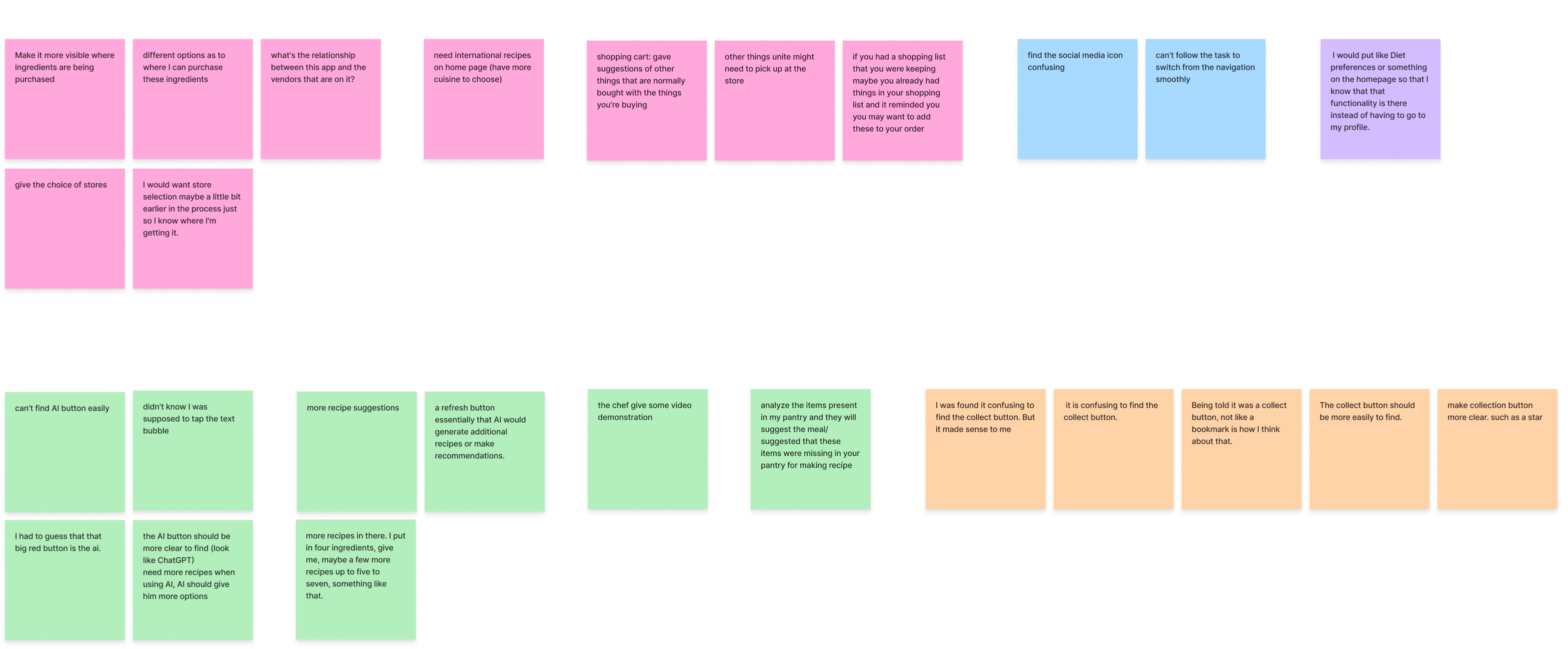
We used affinity mapping in all the tests to organize user feedback into meaningful clusters. We used it to identify recurring issues and prioritize which problems to address first in our design.
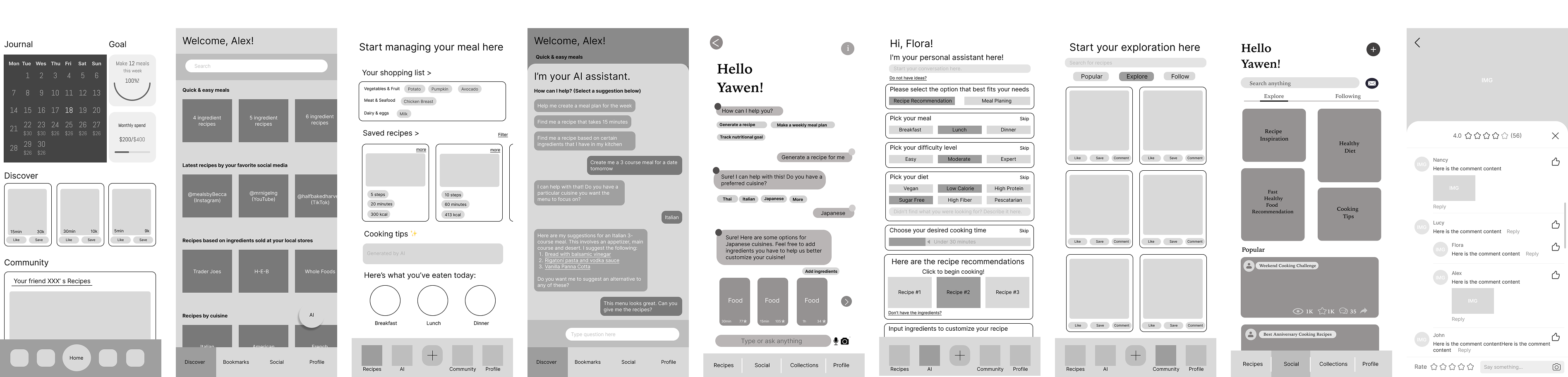
We designed targeted questions around three main flows—Homepage, AI Recipe Assistant, and Find Features. These were shown through wireframes and discussed with 2 students and 3 professional participants over Zoom.
Users seek high-quality visual content
Attractive recipe images are a major factor influencing user engagement and selection.
Personalization and efficiency matter
They want smart filters, personalized suggestions, and ingredient delivery.
AI should support, not just suggest
Users expect AI to help generate shopping lists, provide voice assistance while cooking, and suggest recipes based on what they already have at home.
Cross-platform integration is desirable
Users prefer seeing content from multiple platforms in a single app.
Practical utility over advanced tracking
Meal goals and tracking features are less important.
Tested 5 core functions:
- Recipe selection & checkout
- Recipe community
- AI-assisted cooking
- Meal-based search
- Food preference setting
- Users confused by unclear icons
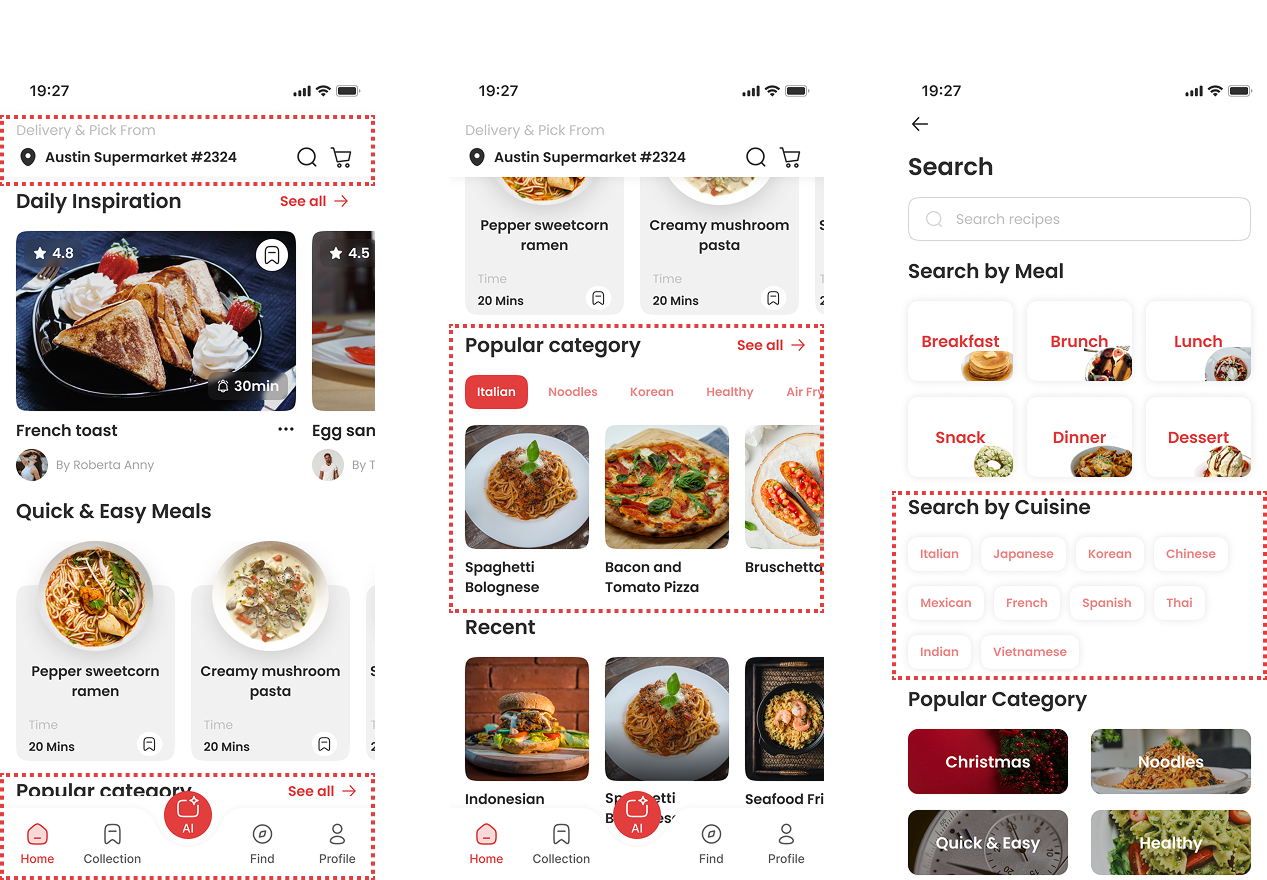
- Store choice is less visible
- Personalized filters lacking
- AI suggestions too limited
- Users want pantry management
- More AI suggestions for shopping list
- Added icon descriptions for clarity
- Made store switch more prominent
- Introduced ‘search by cuisine’
- Better AI-generated options
- Integrate Pantry management
- Better shopping list management
This was a fulfilling experience where, over nine weeks, we went from zero to a complete concept design. Rather than focusing on solutions right away, I learned to first slow down and deeply understand the user—what frustrates them, what motivates them, and where they get stuck.
Tiny choices such as button placement, animation timing, and input flow can shape how intuitive or frustrating a moment feels. Great UX isn’t just about big ideas, but about refining the small stuff that users touch.
Jumping to features too early can lead to mismatched outcomes. Listening to users shapes more relevant, effective ideas.
Testing, failing, and refining are not setbacks, they’re how thoughtful user experiences are made.