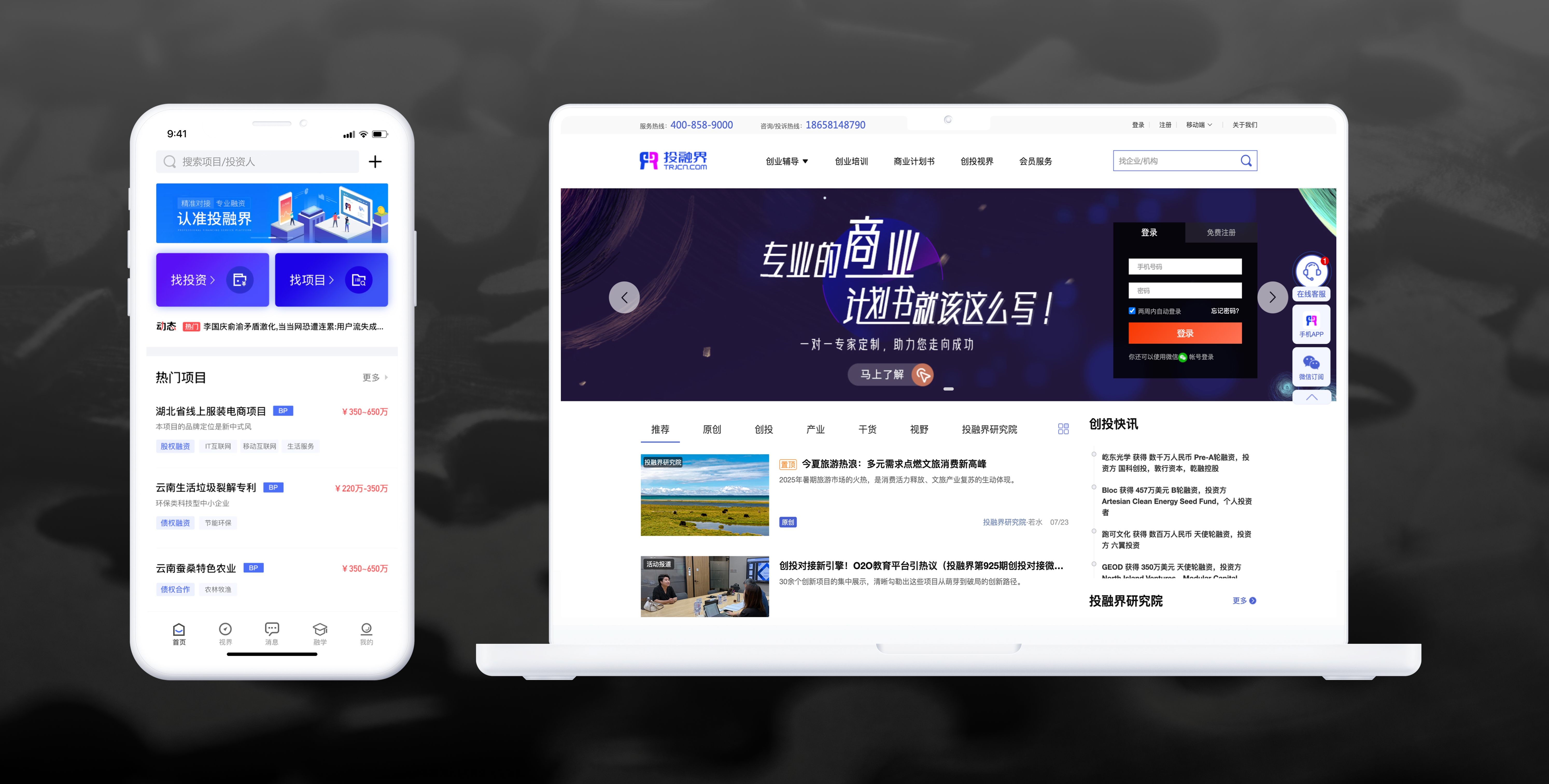
FinBridge is a one-stop financing information service platform that helps SMEs (small and medium-sized enterprises) overcome capital difficulties by connecting them with investors and providing tailored entrepreneurial services both online and offline.
At Zhejiang TouRongJie Technology, I worked on FinBridge, a web and mobile financing information service platform connecting SMEs with investors and streamlining the financing process. The platform enables users to publish and browse projects or investment needs, discover and filter suitable opportunities, stay updated with entrepreneurial and investment news, access entrepreneurship training, and register for BP customization& offline roadshows service through online courses and consultations. FinBridge serves over 300,000 users on the web and more than 120,000 on the mobile app.
As a Product Specialist, I conducted user research and competitor analysis to identify key pain points and translate insights into product requirements and prototypes. Partnering closely with engineers, I led 10 product iterations, optimizing core user flows across both web and mobile platforms, focusing on streamlining the pitch-to-interview process and cross-platform user experience.
Small and medium-sized enterprises often face financing challenges due to weak risk resilience, limited reputation, and narrow financing channels. This creates a need for more accessible and smarter financing information services.

- Small and medium-sized enterprises play an important role in the real economy
- The demand for loans had a significant growth
- There was an unmet demand for loans from SMEs
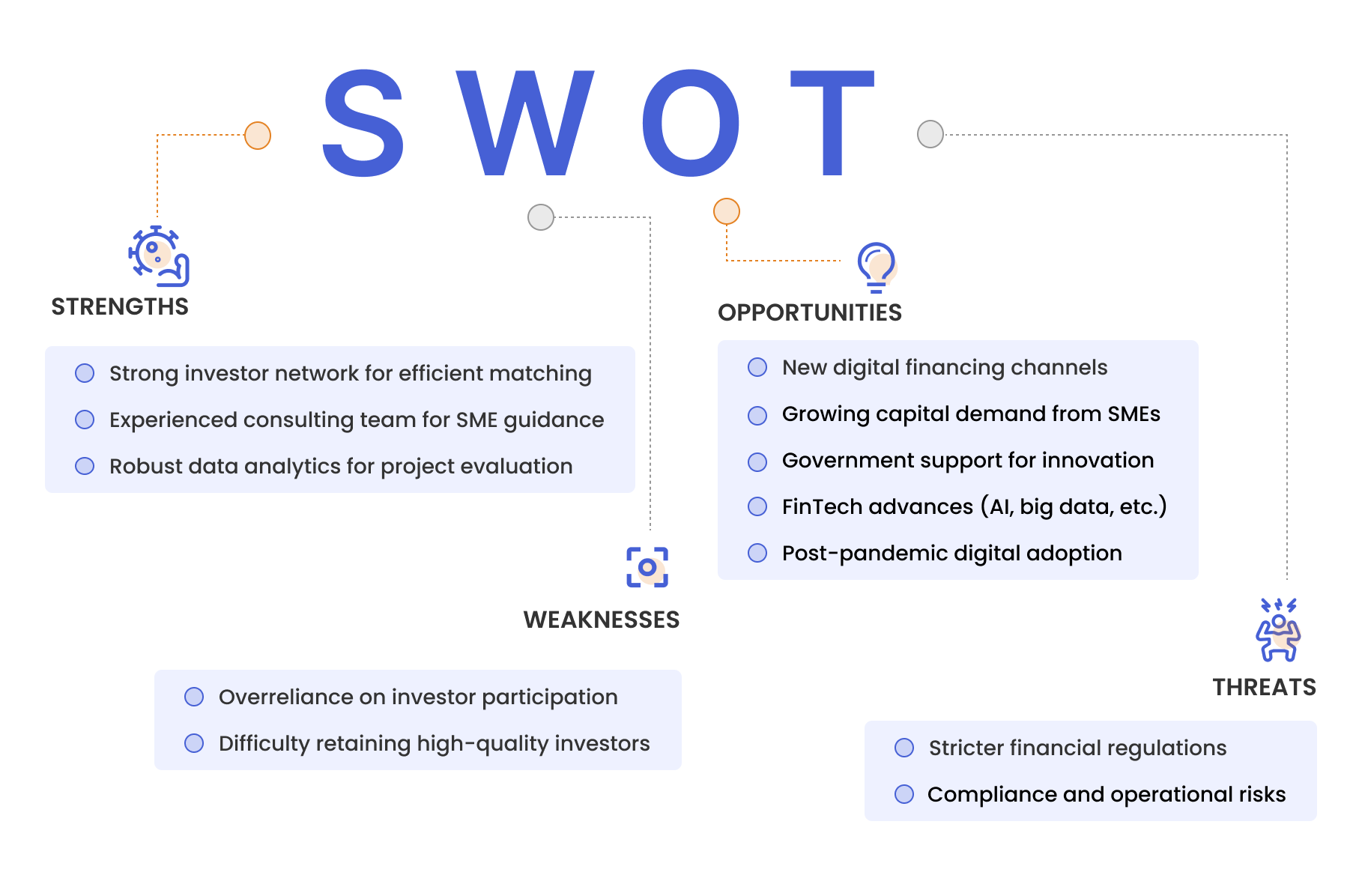
This SWOT analysis outlines the platform’s key strengths and weaknesses, while highlighting opportunities in rising SME financing demand and digital innovation, alongside risks posed by regulatory changes.
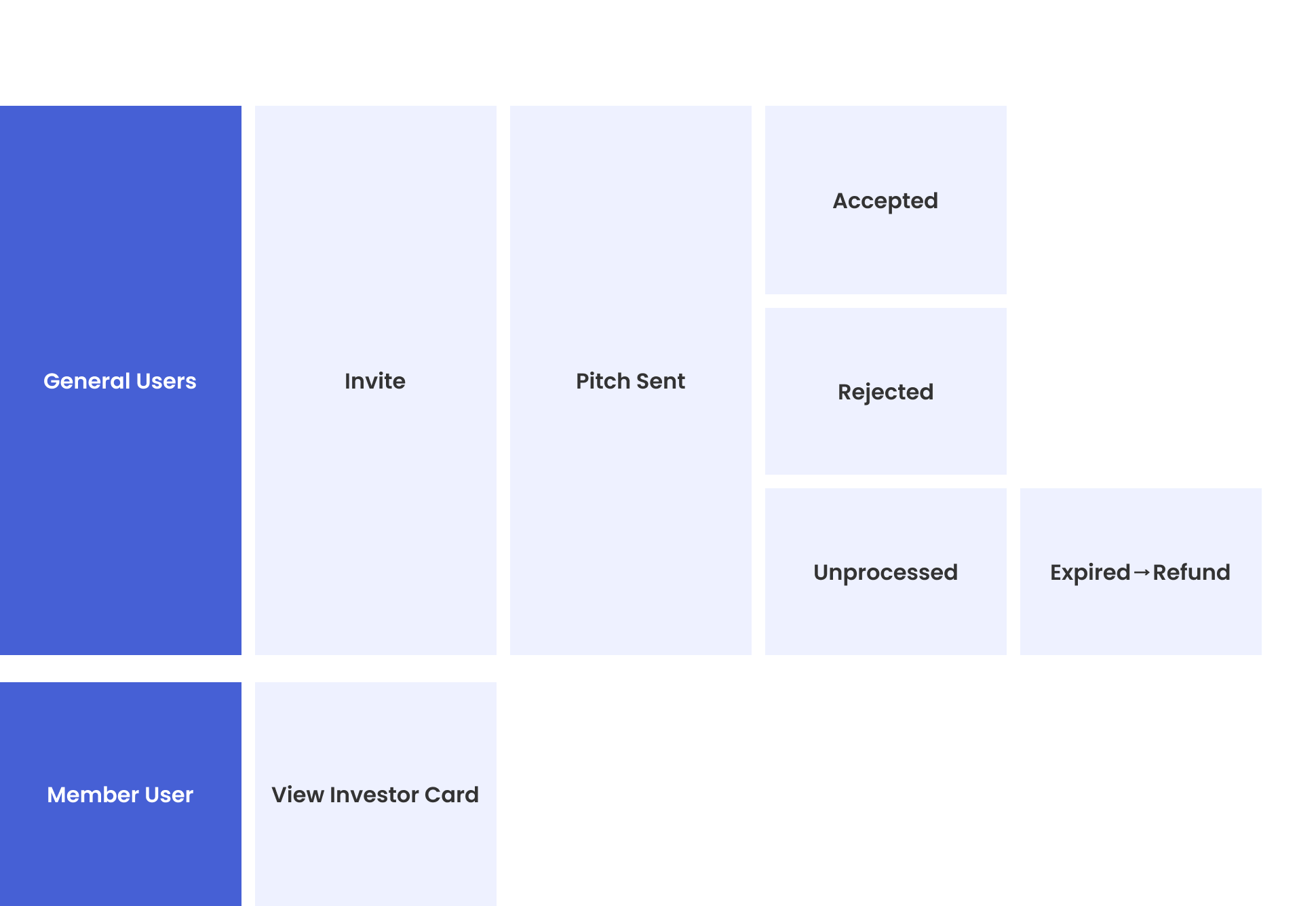
The product audit we conducted before design highlights key inefficiencies in the current investor pitching process. From fragmented workflows to low user engagement, the system poses challenges across user experience, operations, and business outcomes.
Workflow Friction: Investor-invited pitches still require manual processing; communication often moves off-platform and is hard to track.
Poor User Experience: Project owners face passive waiting after acceptance and frustration after rejection; membership benefits are unclear.
Platform Inconsistency & Outdated UI: inconsistent content (news, courses, investor & project resources) across web and APP platforms; outdated Web UI weakens brand trust and reduces user engagement.
Operational Pressure: Low investor responsiveness increases manual workload for support and operations teams.
Business Impact: High expired and refund rates reduce platform revenue and weaken user retention.
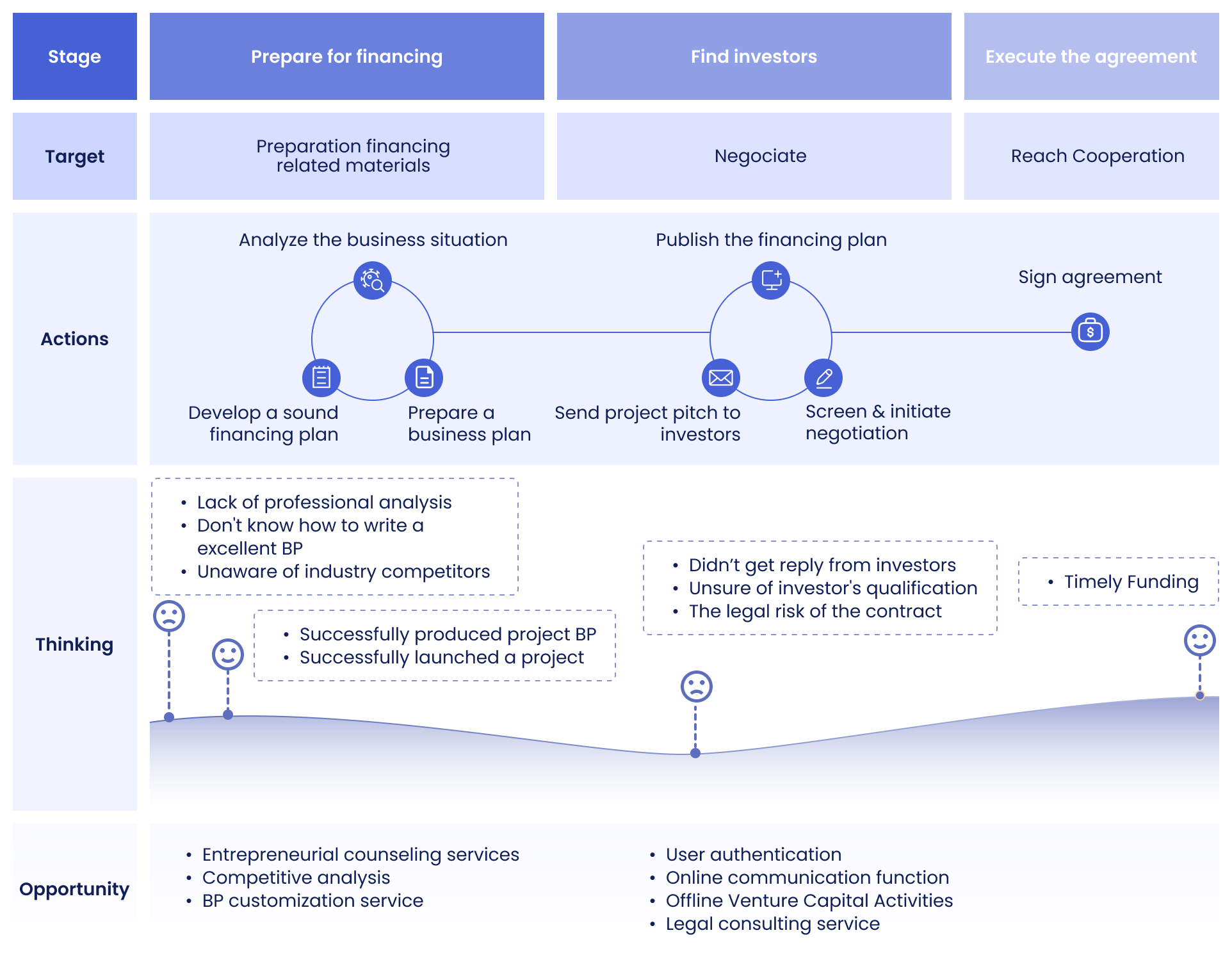

I used user journey mapping to help identify key pain points and opportunities from both sides of the financing platform. Understanding the asymmetry between project owners and investors helped inform more balanced, actionable design solutions.
Based on the identified pain points across the project and investor journeys, the design focused on improving transparency and communication efficiency in the investment process, while also addressing platform consistency and visual credibility to support a more cohesive experience across App and Web.
- Streamline Pitch & Feedback: Cut steps and speed up responses.
- Boost Transparency: Real-time, trackable interview and investor status.
- Elevate Membership Value: Priority visibility and faster access for members.
- Align Content & UI: Ensure consistency in core content (news, courses, investor & project resources) across App and Web, and modernize the Web interface to enhance credibility and user trust.
We introduced in-app instant messaging (IM) to streamline interviews and enable real-time investor–founder communication.
Compared to the previous passive, off-platform process, this design improves feedback efficiency, keeps interactions within the platform, and supports a flexible pay-per-access model for non-members.
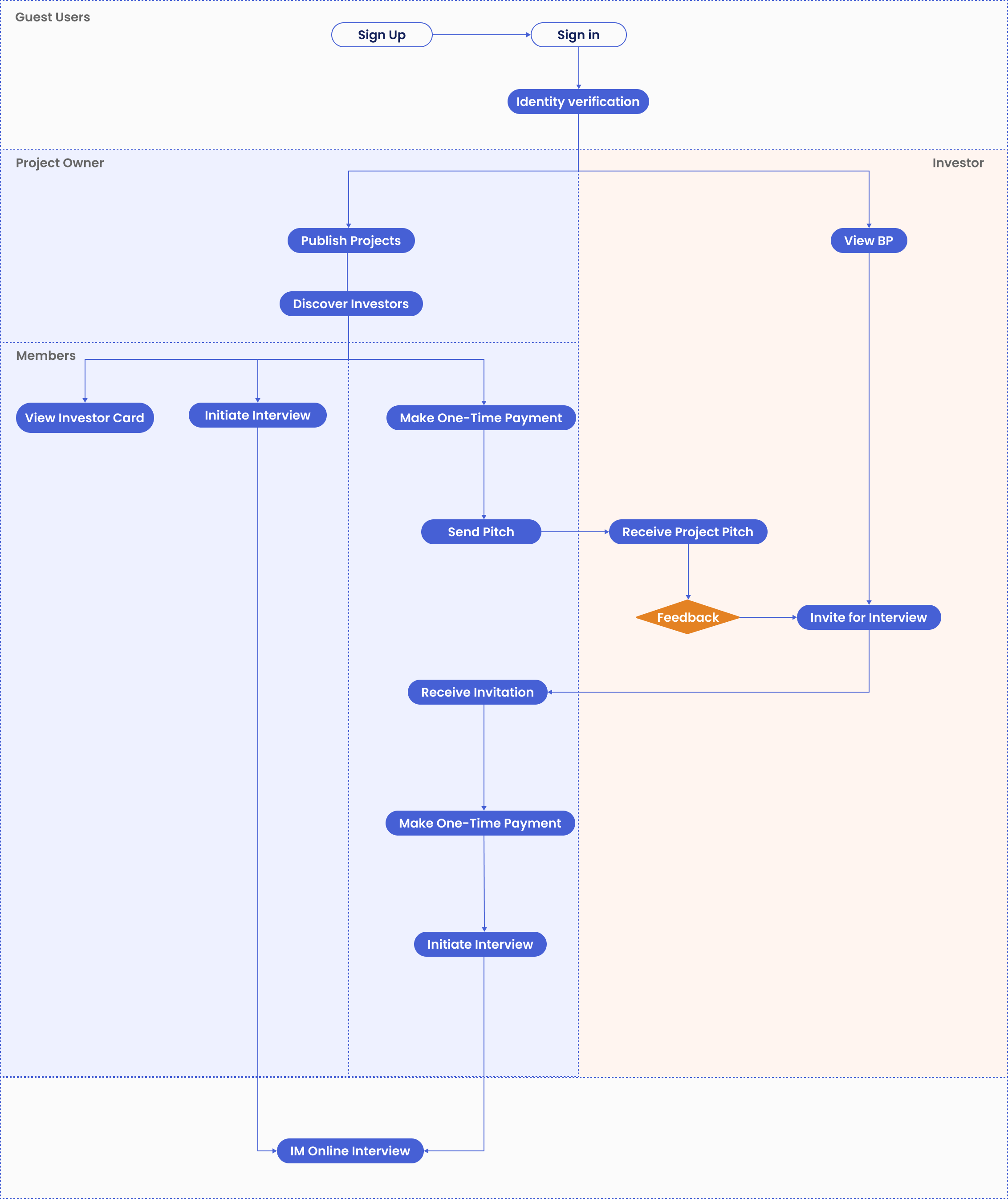
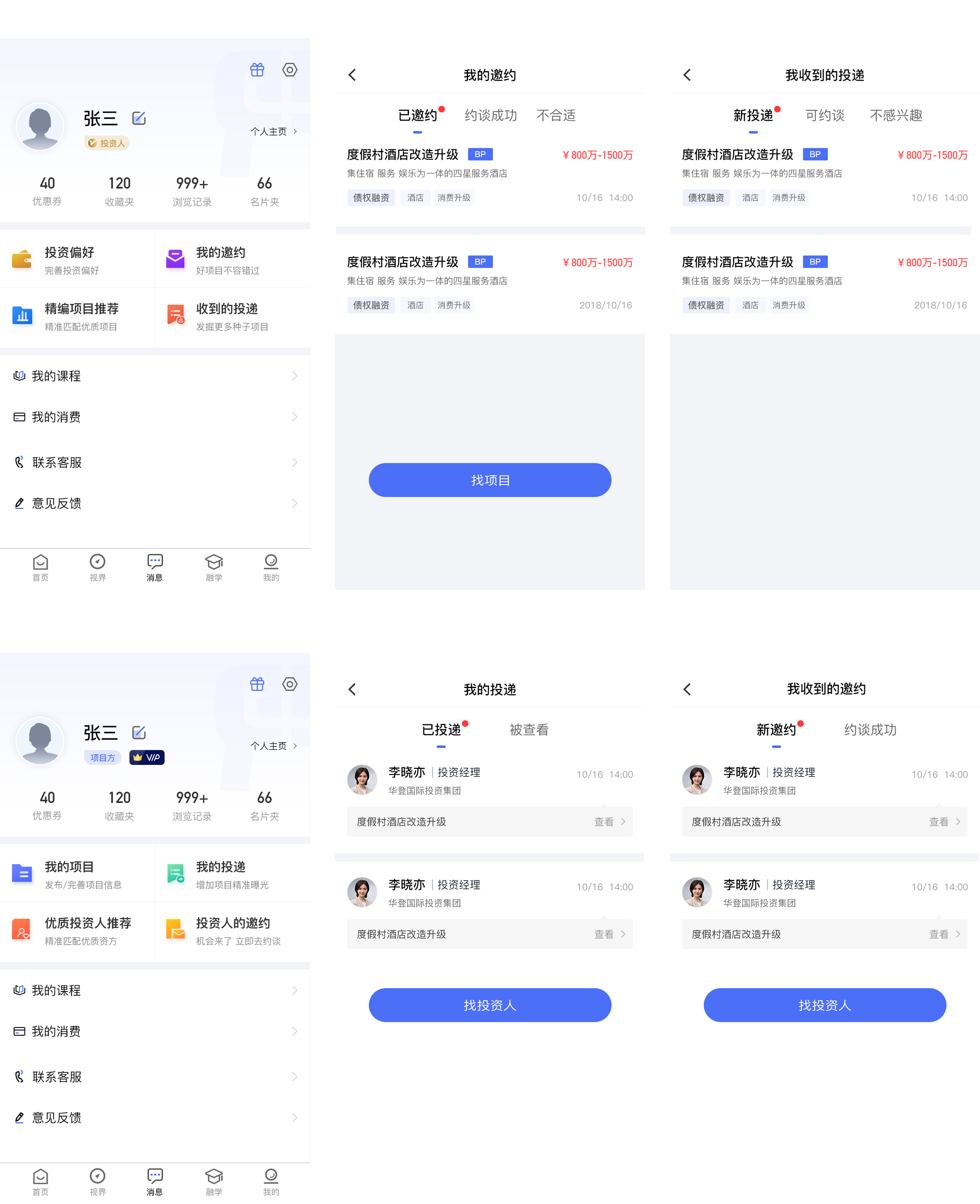
The mobile app was designed to support real-time, lightweight interactions between project owners and investors. While maintaining core pitching functions, the app introduces instant messaging and clear status tracking, all optimized for users on the go. Each feature is streamlined to reduce friction and enhance responsiveness across the financing journey.
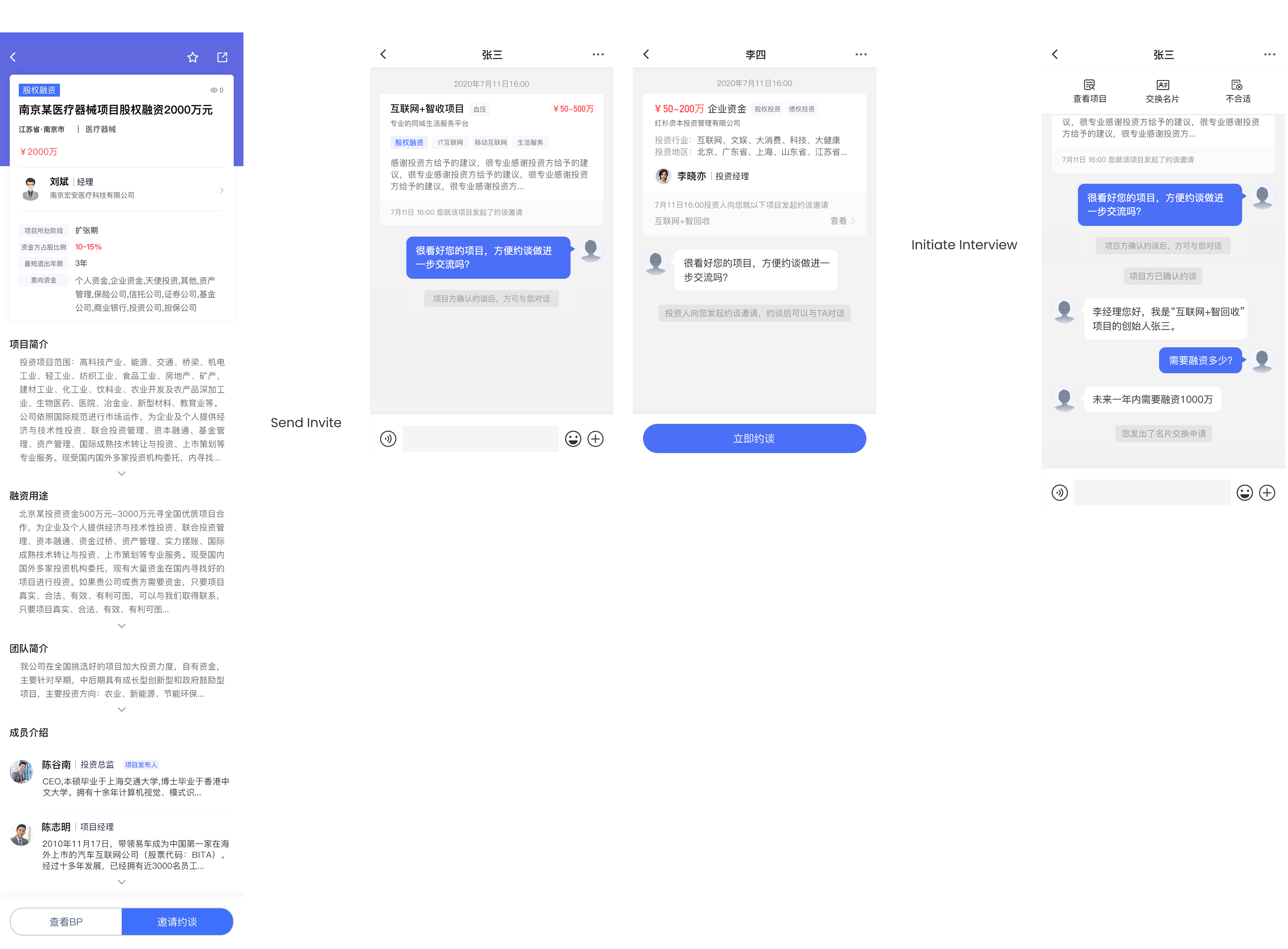
Investors can send direct interview invitations to promising projects. Project owners receive push notifications and can initiate in-app communication immediately, shortening the time from pitch to conversation.
Increases investor engagement and encourages high-intent matches.
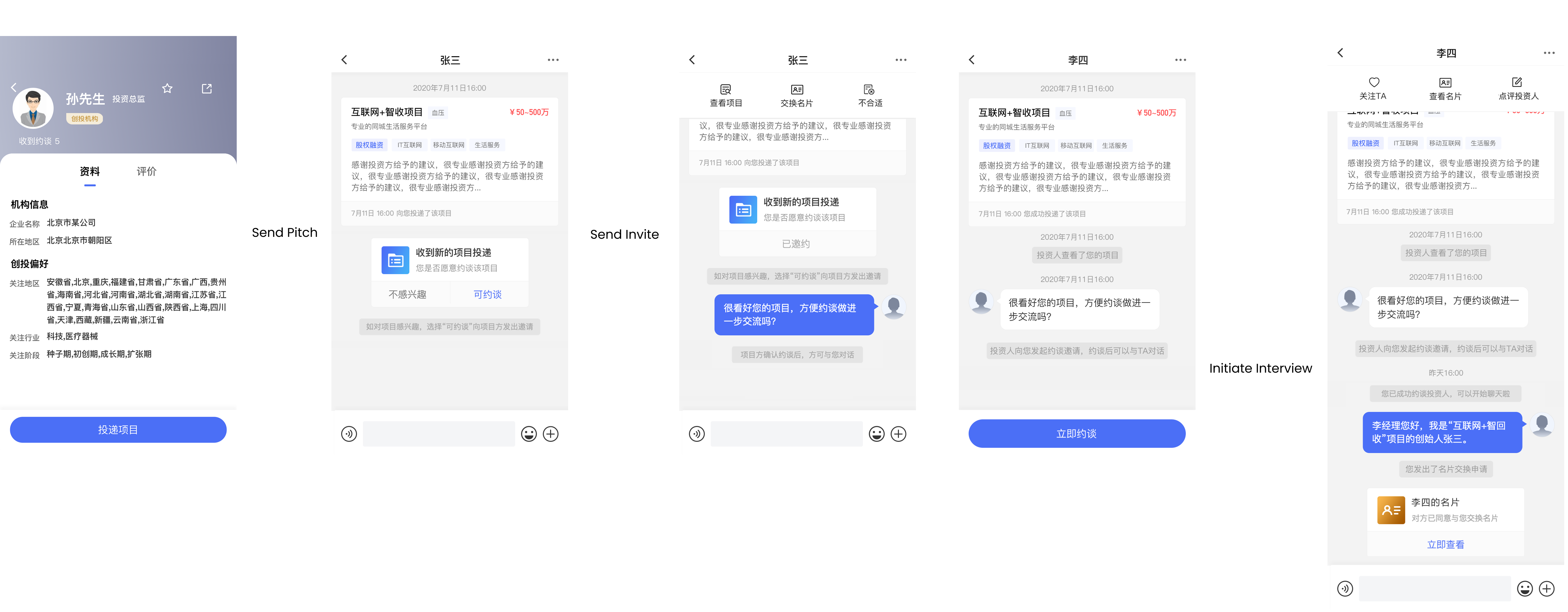
Project owners can easily pitch to investors. The system supports both member-based access and one-time paid delivery, balancing accessibility with monetization.
Reduces friction in the early outreach phase and empowers startups with flexible options.
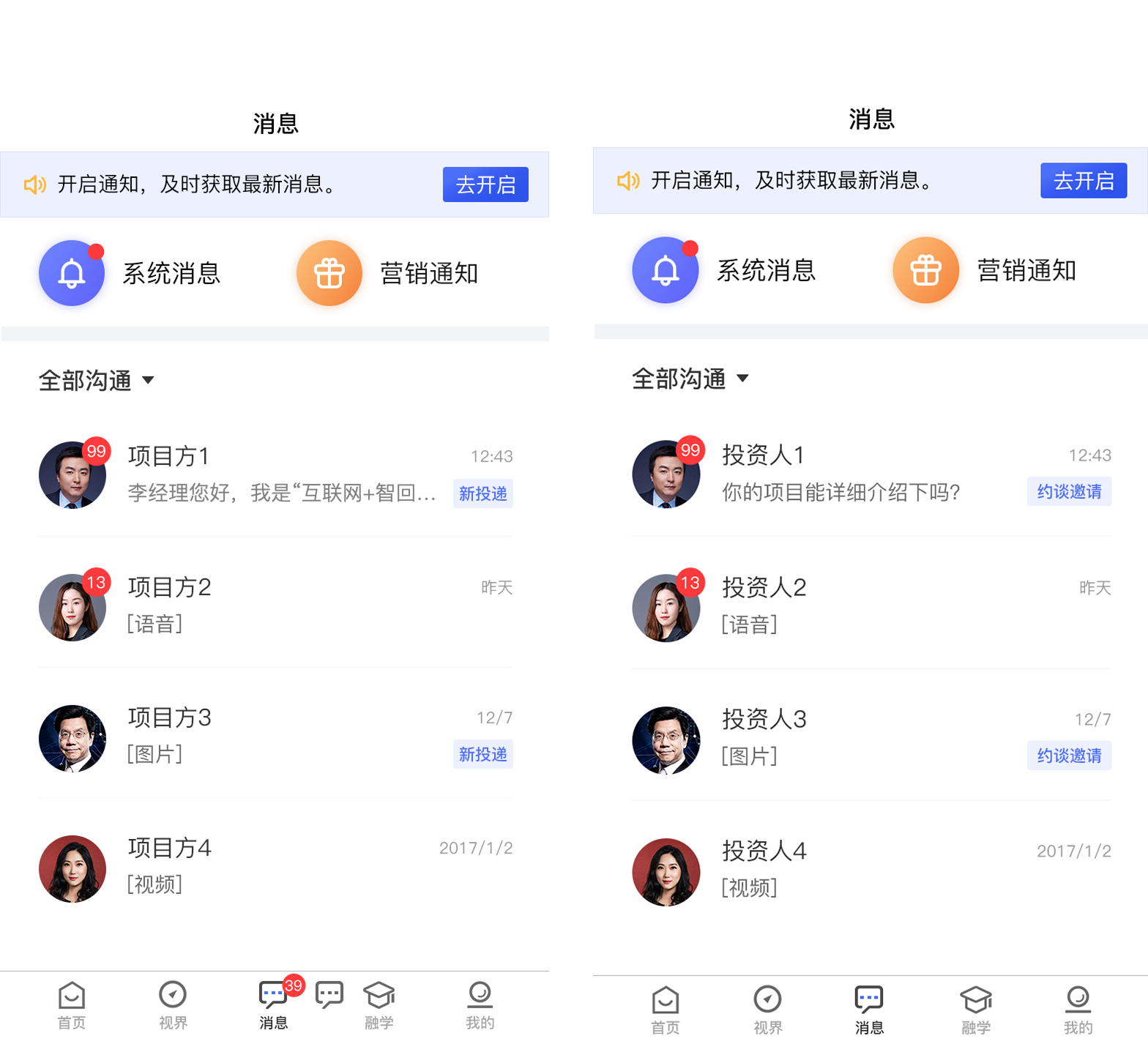
A dedicated message center enables real-time investor-founder conversations, replacing delayed and disconnected communication flows. Users can track message status and respond directly within the platform.
Enhances transparency and efficiency, keeping users engaged within the app.
Users can view their pitch history, track invitation responses, and manage follow-ups in one place. Clear status labels and timestamps help maintain momentum and support better decision-making.
Centralizes progress tracking and builds user trust in the process.
The web interface was designed to support information-heavy tasks such as browsing, evaluating, and managing financing opportunities. I focused on improving the discoverability of projects and investors, enhancing resource accessibility through news and course modules, and streamlining the user dashboard for better tracking of pitching and interview activity. Advanced filtering tools and structured layouts were used to deliver a clear, professional, and scalable desktop experience.
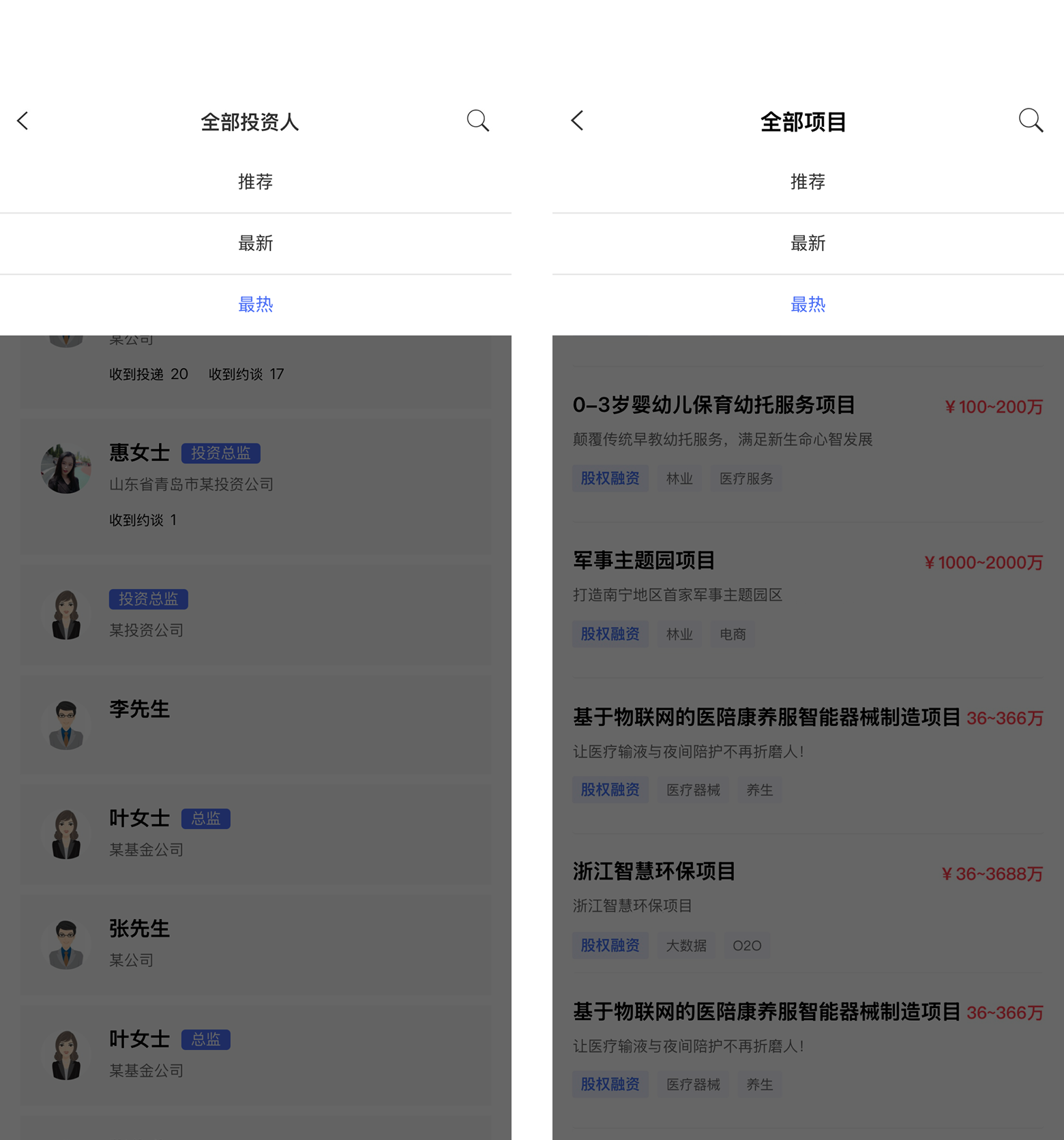
The investor list helps project owners discover and connect with relevant investors. Advanced filters support targeted outreach by industry focus, investment region, and preferred funding stage. Clear call-to-action buttons (e.g., view profile, send pitch) support decisive engagement.
The project list allows investors to efficiently browse and evaluate startup projects based on their investment preferences. A multi-criteria filtering system, covering industry, region, and project stage, enables quick identification of high-potential matches. Each project card includes key highlights to support fast scanning and decision-making.
The platform provides a centralized space for curated content on startup financing, platform updates, and expert advice. The layout emphasizes readability and timely updates, keeping users informed and engaged.
Educational resources are offered through a structured course library, supporting project owners in developing better pitch materials and understanding investor expectations. Courses can be browsed by topic, format, or level.
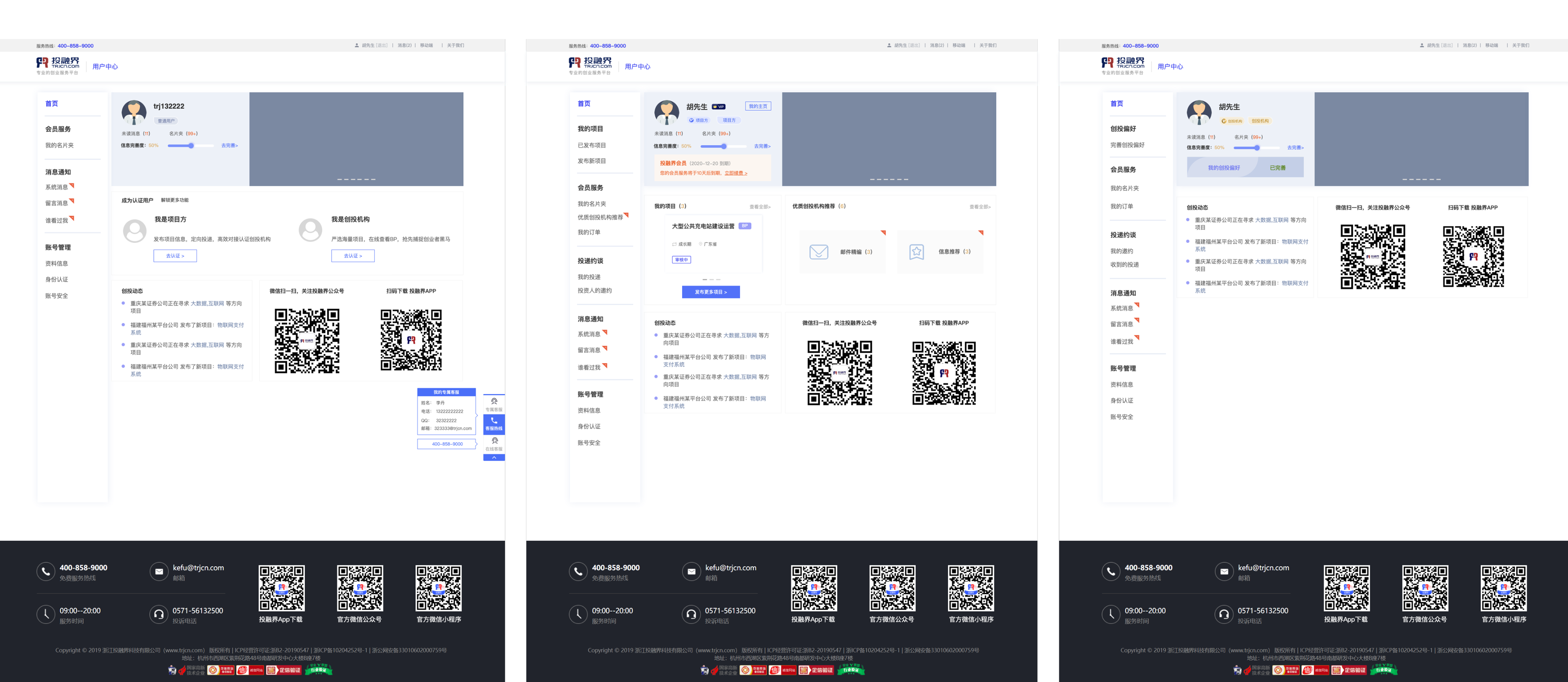
The user dashboard offers a consolidated view of sent pitches, received interview invitations, and profile settings. A dual-column layout clearly separates outbound and inbound actions, helping users track engagement at a glance.
To improve match efficiency between investors and project owners, I designed a dynamic ranking mechanism based on multi-dimensional user behaviors and time decay. Scores update hourly and prioritize engagement quality over recency alone.
Score Formula: Visualize Score = (Base + Interaction) / Time Decay
Update Frequency: Every 1 hour
Time Decay Logic: Score decreases over time if no engagement
Customization: Weight config handled via admin dashboard
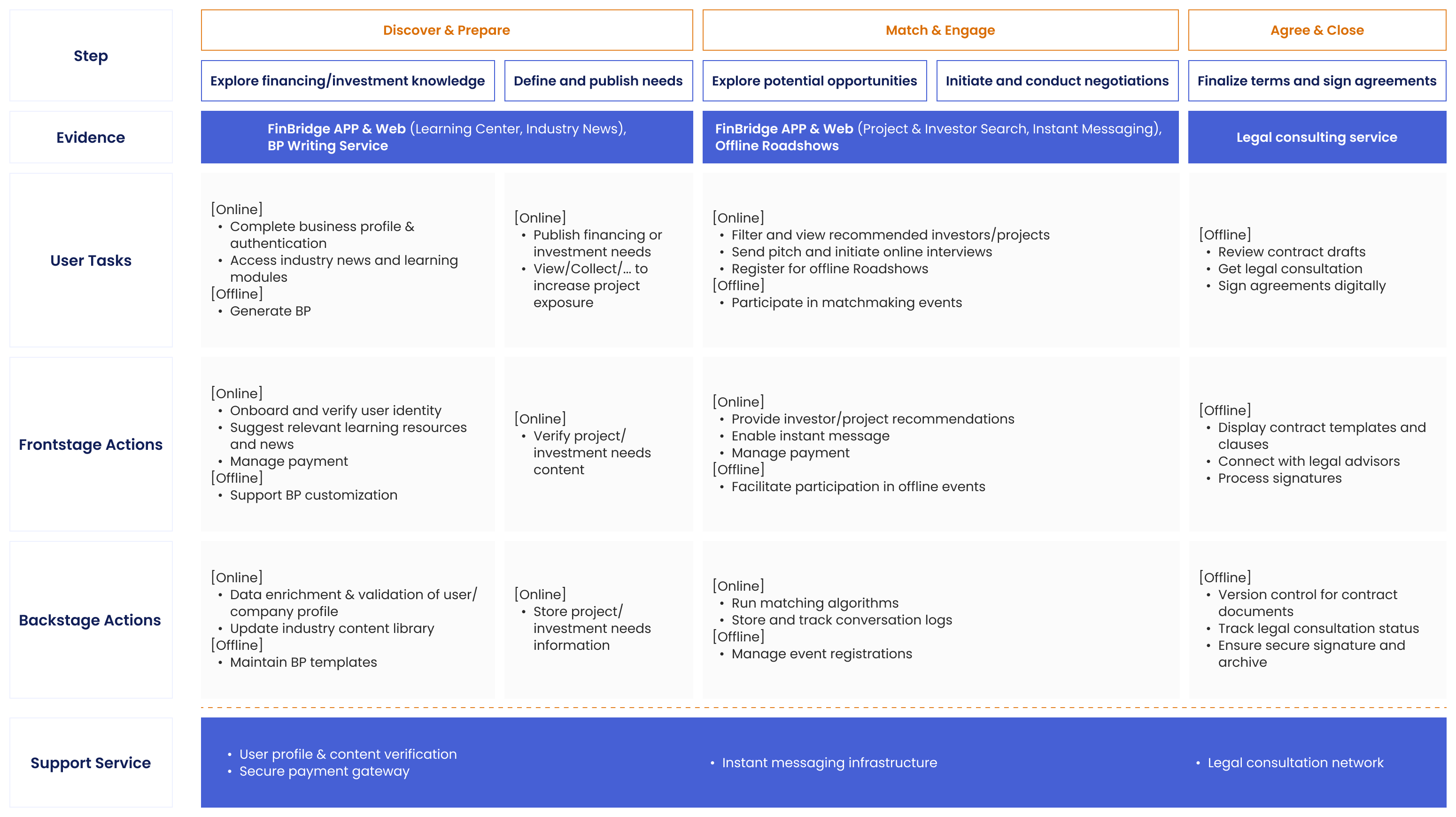
FinBridge delivers an end-to-end financing service ecosystem that connects SMEs with investors through both web and mobile channels.
The platform supports the entire journey, from preparing business profiles and investment materials, publishing and discovering opportunities, engaging in online and offline matchmaking, to securing legal agreements, enabling SMEs and investors to move efficiently from initial contact to successful cooperation.
This project marked my first in-depth collaboration within a product team, where I grew significantly as a designer—both in mindset and execution.
Product Thinking: Learned to balance user needs, business goals, and technical feasibility when shaping features.
Tool Proficiency: Communicated design ideas clearly and iterated efficiently using Figma and Axure.
Research & Analysis: Improved ability to plan and synthesize user research, turning insights into design direction.